
eGRACS Strategic Program Controls Triangle
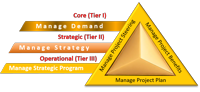 This Tactical Tier control triangle seeks to ensure the successful execution of strategic initiatives through effective project management, resource allocation, and alignment with the organisation's overarching business and technology goals.
This control rolls down from the Manage Demand Domain and cascades into: 1.1.3.1-Project Plan:, 1.1.3.2-Project Steering, and 1.1.3.3-Project Benefits controls.
Control Mappings:
Cobit:2019 ➡️ EDM01; EDM01.02; EDM02; EDM02.02; APO02; APO02.05; APO05; APO05.02; BAI01; BAI01.01; BAI01.05; BAI03; BAI03.12
GDPR:2024 ➡️ Art.24; Art.25
ISO27001:2022 ➡️ 6; 6.2; 8; 8.1
ISO38500:2024 ➡️ 4; 4.1; 4.1.2; 4.2; 5.2.2; 5.3.1; 5.4.2; 5.5.1; 5.8.2; 6; 6.4; 7; 7.2
ITIL:v4 ➡️ GM7; GM8; GM11; GM12
NIST:CSFv2 ➡️ GV.OC-04; GV.OC-05